


Comparing Hydraulic Flow in PVC GI and CPVC Pipes How Surface Roughness Affects Water Delivery

Water delivery systems rely heavily on the type of pipes used, and the efficiency of these pipes depends on several factors. One key factor is the internal surface roughness of the pipe, which directly influences hydraulic flow. This post compares three common pipe materials—PVC, GI, and CPVC—and explains how their surface characteristics impact water flow and delivery performance.
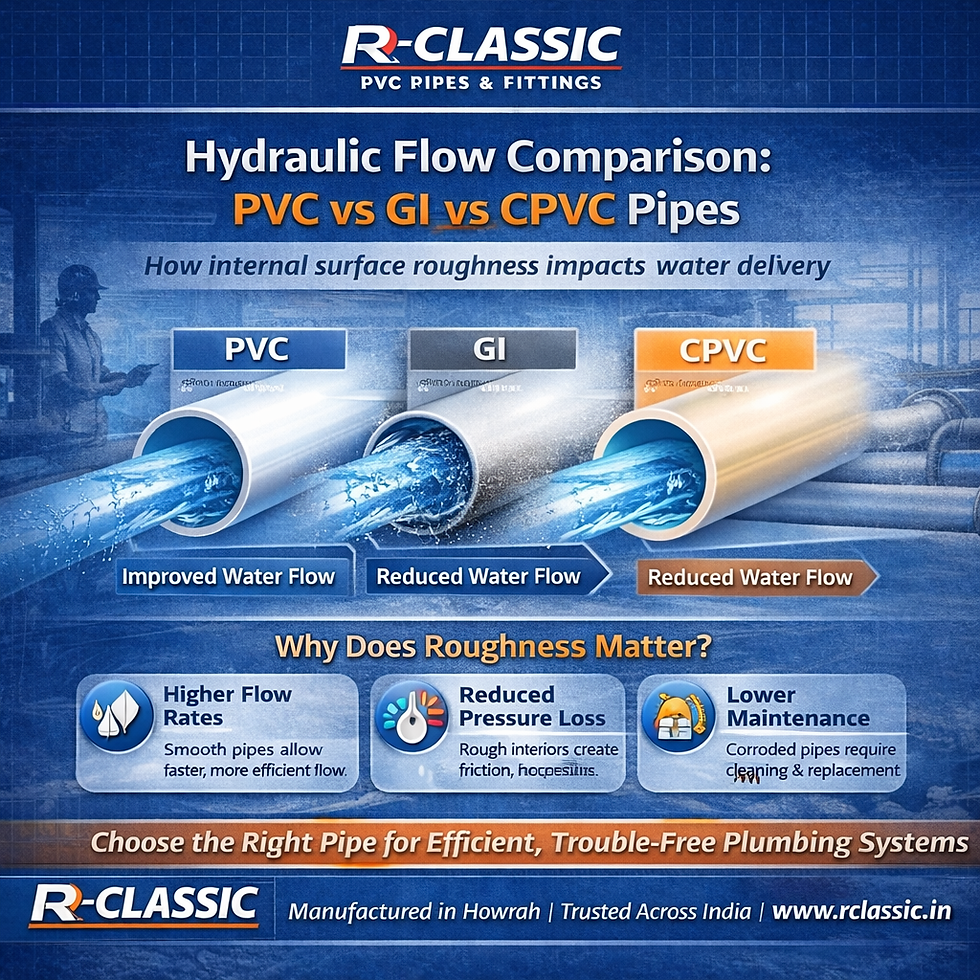
Understanding Hydraulic Flow and Surface Roughness
Hydraulic flow refers to the movement of water through pipes, influenced by pressure, pipe diameter, and internal surface conditions. Surface roughness describes the texture inside the pipe, which can create friction and resistance to flow. The rougher the surface, the more energy water loses as it moves, reducing flow rate and increasing pumping costs.
Smooth internal surfaces allow water to flow more freely, while rough surfaces cause turbulence and slow down the flow. This difference affects not only water velocity but also pressure loss over distance.
Characteristics of PVC Pipes
PVC (Polyvinyl Chloride) pipes are widely used in plumbing and irrigation due to their smooth internal surfaces and resistance to corrosion. The typical roughness coefficient for PVC pipes is very low, around 0.0015 mm, which means water flows with minimal friction.
Advantages of PVC pipes:
Very smooth interior reduces friction losses
Lightweight and easy to install
Resistant to chemical corrosion and scaling
Cost-effective for many applications
Because of their smoothness, PVC pipes maintain higher flow rates and lower pressure drops compared to metal pipes of the same diameter. This makes them ideal for long-distance water delivery where maintaining pressure is critical.
Characteristics of GI Pipes
GI (Galvanized Iron) pipes are steel pipes coated with zinc to prevent rusting. While strong and durable, GI pipes have a rougher internal surface compared to PVC and CPVC. Over time, corrosion and mineral deposits increase roughness, further reducing flow efficiency.
The roughness coefficient for GI pipes typically ranges from 0.15 mm to 0.3 mm, which is significantly higher than PVC. This roughness causes more friction, leading to greater pressure loss and reduced flow rates.
Challenges with GI pipes:
Higher internal roughness increases friction losses
Prone to corrosion and scaling over time
Heavier and harder to install
Requires maintenance to prevent flow restrictions
GI pipes are often used in older plumbing systems or where mechanical strength is a priority, but their hydraulic performance is generally lower than plastic alternatives.
Characteristics of CPVC Pipes
CPVC (Chlorinated Polyvinyl Chloride) pipes are similar to PVC but can withstand higher temperatures. They also have smooth internal surfaces, with roughness coefficients close to PVC, around 0.0015 mm.
Benefits of CPVC pipes:
Smooth interior ensures efficient water flow
Can handle hot water applications better than PVC
Resistant to corrosion and chemical damage
Lightweight and easy to work with
CPVC pipes combine the hydraulic advantages of PVC with added temperature resistance, making them suitable for both cold and hot water systems without sacrificing flow efficiency.
How Surface Roughness Impacts Water Delivery
The difference in internal roughness between these pipes affects water delivery in several ways:
Flow rate: Smoother pipes like PVC and CPVC allow higher flow rates at the same pressure compared to rougher GI pipes.
Pressure loss: Rough surfaces cause more friction, leading to greater pressure drops along the pipe length. This means pumps must work harder or larger diameters are needed.
Energy consumption: Increased friction means more energy is required to maintain flow, raising operational costs.
Pipe lifespan: Rougher pipes are more prone to scaling and corrosion, which can further worsen flow conditions over time.
For example, a 100-meter length of 50 mm diameter pipe carrying water at 10 liters per second will experience significantly less pressure loss in PVC or CPVC compared to GI. This difference can translate into lower pumping costs and more reliable water delivery.
Practical Considerations for Choosing Pipes
When selecting pipes for water delivery, consider the following:
Application temperature: Use CPVC for hot water, PVC for cold water, and GI where mechanical strength is essential.
Water quality: Hard water can cause scaling inside GI pipes, increasing roughness faster.
Installation environment: PVC and CPVC are lighter and easier to handle, reducing labor costs.
Budget: While GI pipes may have higher upfront costs and maintenance, PVC and CPVC offer long-term savings through better flow efficiency.
Longevity: Plastic pipes resist corrosion, maintaining smooth surfaces longer than metal pipes.
Summary
The internal surface roughness of pipes plays a crucial role in hydraulic flow and water delivery efficiency. PVC and CPVC pipes offer smooth interiors that reduce friction losses, maintain higher flow rates, and lower energy costs. GI pipes, with their rougher surfaces, experience more pressure loss and require more maintenance to keep flow efficient.


Comments